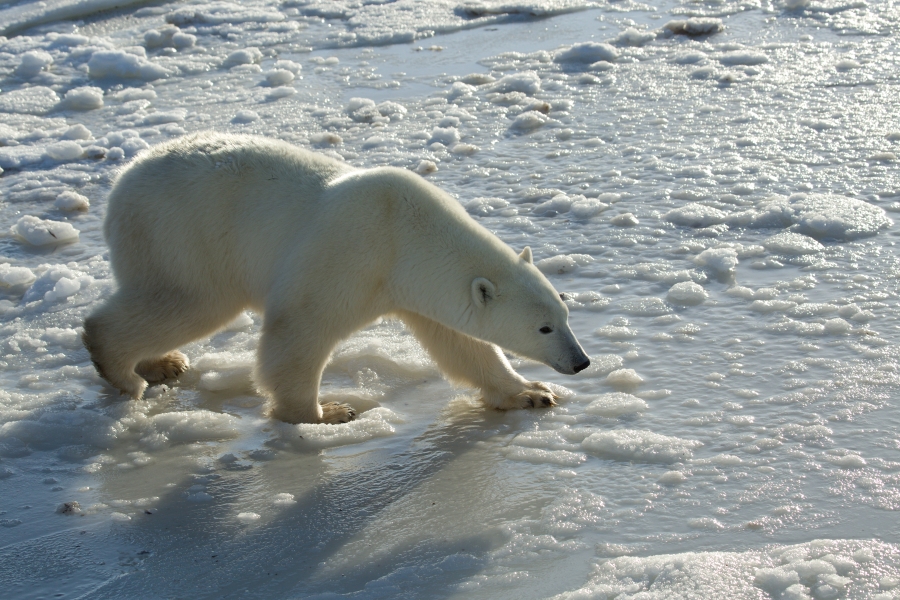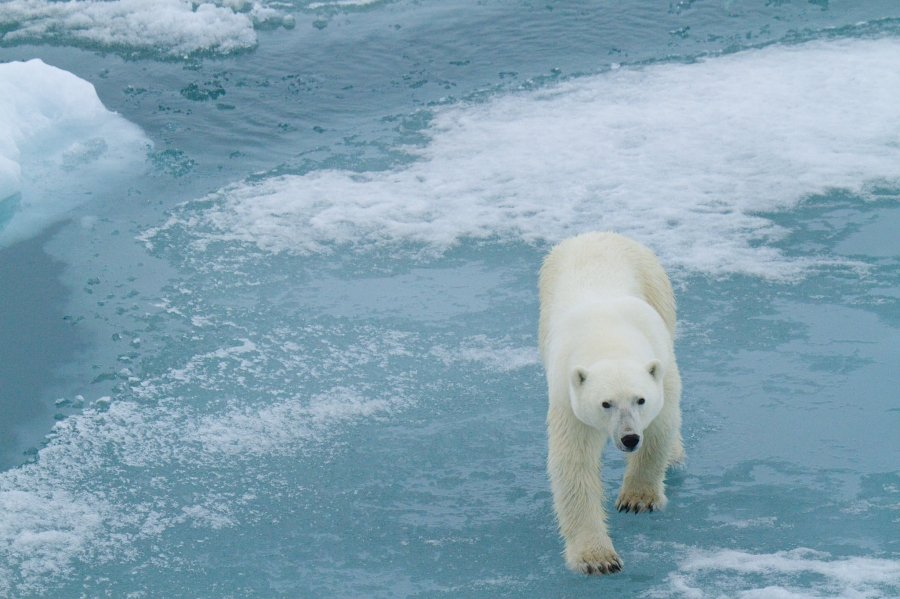
Rapid emissions cuts could still ensure their long-term survival. Otherwise, some Arctic regions seem set to lose polar bears by 2080 – and all but a few populations could collapse by 2100, according to a new study.
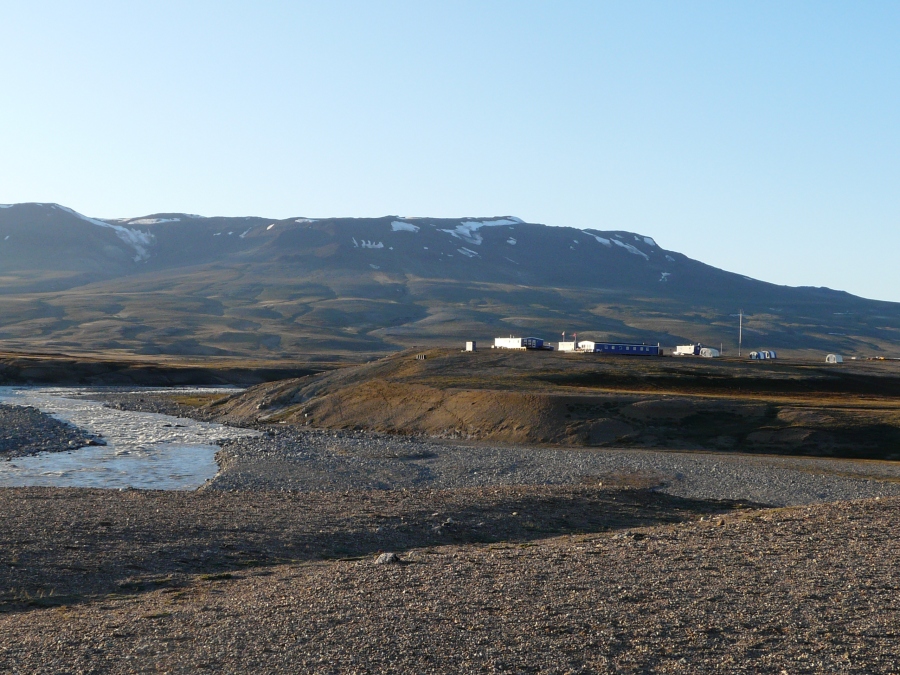
Zackenberg station from the air (I.Quaile) In the remote, high Arctic region of north-eastern Greenland, at 74° North, a scattered group of blue and white buildings and tent-like structures perches above a river which starts to swell with melting ice, in a broad valley amongst green and brown hills, dotted with snow. For almost 25 …
Heatwaves across the Arctic, smouldering wildfires, early melt onset in Greenland while corona holds up climate negotiations- summer 2020 takes us into unknown territory.
This blog post was written for Arctic Relations , a website devoted to “Arctic scholarship and stories”, led by Hannes Hansen-Magnusson, a Senior Lecturer in International Relations at the University of Cardiff, and coordinated by Charlotte Gehrke from the same University. There is a wonderful network of Arctic experts and enthusiasts around the planet. Thanks …
With much of the world in lockdown and the potentially lethal corona virus dominating the agenda, it is easy to become distracted from other important issues – such as climate change in the Arctic. There is a trend - which I consider unfortunate and counter-productive - especially in the social media to discuss how the …
As the iceblogger - like most folks these days - gets organised in the days of corona, with virtual meetings and conferences in the making, perhaps these favourite Arctic pictures will bring a smile until the next post is ready. If you read German, I have written a couple of articles for Polar Journal, where …
Scientists find ancient Antarctic ice melt could happen again, raising sea levels by three metres. During my first trip to Australia back in 1990, in the days when we had no mobiles and travellers had to queue up outside a telephone box, a breath of chilly air (by Australian winter standards) prompted a local next …
Continue reading A warm breeze coming up from the pole? What’s going on in Antarctica?
The latest figures from the NSIDC do not make happy reading. The Arctic sea ice extent averaged for October 2019 was 5.66 million square kilometers (2.19 million square miles), the lowest in the 41-year continuous satellite record. The experts tell us this was 230,000 square kilometers (88,800 square miles) below that observed in 2012—the previous …
Continue reading Arctic sea ice record low. Can we communicate our way out of climate paralysis?
Recently, the picture editor of the Guardian, Fiona Shields, published a piece explaining "why we are going to be using fewer polar bears and more people to illustrate our coverage of the climate emergency". She writes: "At the Guardian we want to ensure that the images we publish accurately and appropriately convey the climate crisis …
Continue reading Polar bear pictures and the climate emergency
When the latest IPCC report on climate change and the ocean and cryosphere was published last month, I wrote this commentary for Deutsche Welle. It is so directly related to the Ice Blog brief that it seems right to publish it again here. I am especially encouraged by the reactions of some of my young …
Continue reading Warming Arctic, warming world: the chilling truth